2026 IEEE LOW-POWER COMPUTER VISION CHALLENGE
AI Generated Image Detection
1. Information
- Competition Submission Window: From 12:00 AM Eastern Time on March 1, 2026, to 11:59 PM Eastern Time on April 30, 2026
- Open Submission Window: Ongoing until further notice
- Sponsor: Qualcomm Technology Inc.
- Competition: 2026 Low-Power Computer Vision Challenge (2026 LPCVC)
- Vision Task: AI-generated Image Detection
- Hardware: The submitted model will be evaluated under the following platforms:
- Qualcomm Snapdragon 8 Elite Gen5 Mobile
- Software: Qualcomm AI Hub
- Technical Support: Subscribe to the newsletter or join the Qualcomm AI Hub Slack workspace. Make sure to join channel #lpcvc for competition related notifications.
- Evaluation: Details see below
- Prizes:
- Champion: $6,000
- 2nd: $3,000
- 3rd: $1,000
- $300 for the first 5 teams with valid submissions (better than sample solution)
____________________________________________________________________________________
2. Prerequisites
Two Registrations:
- Each team is required to register a team account and sign the agreement document (one team only needs to register once). We will use this registration information to manage teams and their submissions. (Updates: The registration page is available!)
- Sign up for an account on Qualcomm® AI Hub (top right corner). Every team member can register an account if they want. The Qualcomm® AI Hub is a powerful tool for users to compile, profile, and infer images on real mobile devices
____________________________________________________________________________________
3. Submission Format
Model Format: Participants can train and quantize their models using various libraries, such as PyTorch, ONNX, AI Model Efficiency Toolkit (AIMET). Qualcomm AI Hub and Qualcomm AI SDK support models trained with these libraries, and can compile them for mobile devices. Once the model is generated, please submit to organizers for evaluation and ranking.
* Please refer to [Sample Solution] for more details of model quantization and compilation.
* Please refer to [Sample Dataset] for more details of the input format.
* For Vision-Language models, vision module and language module will need separate compilation.
Please note: Your models will not be evaluated and ranked unless you complete the entire model compilation.
____________________________________________________________________________________
4. Evaluation Details
Update April 3rd:
We now have a video which summarizes useful information regarding key steps and some tips!
Check it out here: https://www.youtube.com/watch?v=y_rEuCRsRXA
4.1 Task Description
Track 3 focuses on detecting AI-generated images and providing structured explanations for the detection results. Unlike traditional binary classification task, this track additionally introduces a Multi-Criteria AIGC Image Evaluation pipeline, requiring models to reason about image authenticity across eight criteria:
- Lighting & Shadows Consistency
- Edges & Boundaries
- Texture & Resolution
- Perspective & Spatial Relationships
- Physical & Common-Sense Logic
- Text & Symbols
- Human & Biological Structure Integrity
- Material & Object Details
A step-by-step reasoning approach is used to evaluate the models. There are 2 prompts:
- One for answering key points regarding the image,
- Another for structuring the output from the previous prompt.
Models must output structured content (JSON) for both ground truth and predictions, decomposing explanations into per-criterion scores, evidence, and the overall prediction.
*Model’s output format must follow a specific template, please refer to the provided [Sample Solution] for output JSON structure and the 2 prompts used
4.2 Evaluation Metrics
The evaluation is conducted in two stages:
- Stage 1: Execution Time:
For all submitted models, only those with a faster execution time than 15TPS will count as a valid solution. - Stage 2: Accuracy:
Format Constraint:
- Outputs from both of the 2 steps must be ≤500 tokens each to be considered as a valid response. Invalid responses will get a score of 0.0 for the image.
Detection Task:
- DetectionScore: Accuracy of “overall_likelihood”
Explanation Task:
- Per-Criteria scoring: Exact Match Accuracy
- Evidence quality: Semantic similarity
- ExplanationScore: 0.5 × CriterionScore + 0.5 × EvidenceScore
- Final Score Calculation:
- Real Images: 1 × DetectionScore
- AI-Generated Images: 0.5 × DetectionScore + 0.5 × ExplanationScore
- Final Score:

4.3 Sample output
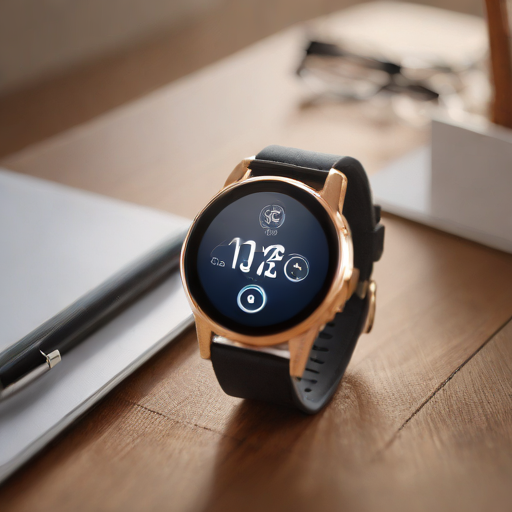
AI Generated Image
Sample response:
{
"overall_likelihood": "AI-Generated",
"per_criterion": [
{
"criterion": "Lighting & Shadows Consistency",
"score": 1,
"evidence": "The overall lighting is consistent, but the contact shadow where the watch body meets the wooden table is overly soft and lacks a defined edge, suggesting an imperfect simulation of physical contact."
},
{
"criterion": "Edges & Boundaries",
"score": 0,
"evidence": "The edges and boundaries of the watch and surrounding objects appear clean and consistent with photographic depth of field, with no obvious haloing or slicing artifacts."
},
{
"criterion": "Texture & Resolution",
"score": 1,
"evidence": "The wood grain texture on the table is overly smooth and uniform, lacking the natural micro-variations and imperfections of real wood. The entire image possesses a characteristic synthetic smoothness often seen in AI generations."
},
{
"criterion": "Perspective & Spatial Relationships",
"score": 1,
"evidence": "The watch appears to be slightly floating rather than resting firmly on the table surface, an effect exaggerated by the weak contact shadow."
},
{
"criterion": "Physical & Common Sense Logic",
"score": 1,
"evidence": "The reflection on the watch face is a generic, hazy light source that does not correspond to a specific environment, which is common in generated images lacking a coherent world model."
},
{
"criterion": "Text & Symbols",
"score": 1,
"evidence": "The characters displayed on the watch screen are completely incoherent. The main 'time' display is a nonsensical jumble of glyphs, and the smaller icons are equally meaningless, a definitive red flag for AI generation."
},
{
"criterion": "Human & Biological Structure Integrity",
"score": 0,
"evidence": "Not assessable as no human or biological subjects are present in the image."
},
{
"criterion": "Material & Object Details",
"score": 1,
"evidence": "The watch strap appears to merge or fuse directly into the watch lug on the lower left side without a proper pin or attachment mechanism. The pen next to the notepad is overly simplified and lacks realistic details like a brand or seam."
}
]
}
____________________________________________________________________________________
5. Compile, Profile, Inference via AIHub
Please refer to the provided [Sample Solution]for details of model compile, profile, and inference via AIHub.
Important! After the close of the submission window, the TOP-5 teams on the leaderboard will be contacted to confirm which model will be their final solution used for the evaluation on the whole test data. The converted ONNX model as well as detailed evaluation scripts should also be requested in addition to the QNN model shared via AIHub.
____________________________________________________________________________________
6. Hints for Success
Related Materials
- SOTA VLM-based methods:
- SFT approach with LLM-annotated samples:
- AIGI-Holmes
- FakeShield
- Common datasets for AIGC detection:
- GenImage (1M+ images)
- SID-set (300K images + explanations)
- SynthScars (12K images + explanations)
Pipeline
- Data preparation:
- Use common datasets and generate your own annotation files for better alignment with Track 3 output requirements
- Training:
- Use LoRA training to save time/computing resources (need to merge LoRA in your base model before quantization)
- Quantization and Conversion:
- Replace calibration data with your custom data for better performance
- Verify performance metrics for both VEG and LLM part: SQNR, PPL, …
____________________________________________________________________________________
7. References